
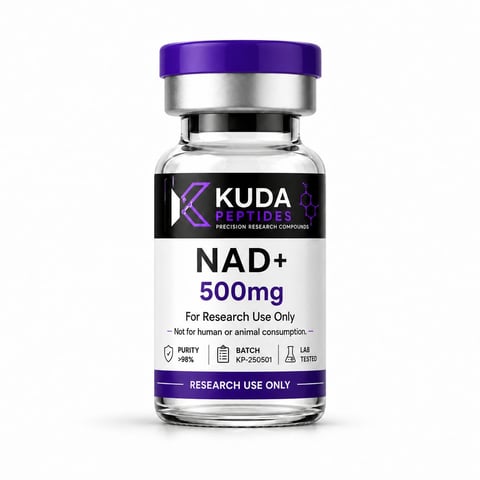
Everything you need to know about Nicotinamide Adenine Dinucleotide and its critical role in cellular health
Nicotinamide Adenine Dinucleotide (NAD+) is a coenzyme found in every living cell of your body. It plays a fundamental role in metabolic processes, serving as an electron carrier in redox reactions that generate cellular energy (ATP). Without NAD+, life as we know it would not exist.
NAD+ was first discovered in 1906 by Arthur Harden and William Young during their studies on yeast fermentation. Since then, research has revealed its critical importance in numerous biological processes including DNA repair, gene expression, cellular signaling, and energy metabolism.
NAD+ serves as a substrate for several critical enzyme families that regulate cellular health and longevity:
NAD+-dependent deacetylases that regulate DNA repair, inflammation, metabolism, and longevity. Sirtuins require NAD+ to remove acetyl groups from proteins, a process crucial for cellular stress resistance.
Poly ADP-ribose polymerases that detect and repair DNA damage. These enzymes consume NAD+ during DNA repair processes, making adequate NAD+ levels essential for genomic stability.
Cell surface enzymes that regulate calcium signaling and immune function. These ectoenzymes use NAD+ as a substrate and are major consumers of NAD+ in mammalian tissues.
NAD+ accepts electrons during glycolysis and the Krebs cycle, becoming NADH. NADH then donates these electrons to the electron transport chain for ATP production.
Essential for mitochondrial function and ATP production. Boosts cellular energy metabolism.
Supports PARP enzymes during DNA repair, promoting genomic stability.
Activates longevity pathways and sirtuins to combat age-related decline.
Supports healthy blood vessel function and angiogenic capacity.
Supports neuronal health and mitochondrial function in the brain.
Supports healthy insulin sensitivity and glucose metabolism.
Research Use Only: This product is intended exclusively for laboratory research purposes. Not for human consumption. All research must be conducted in controlled laboratory settings by qualified personnel in accordance with applicable laws and regulations.