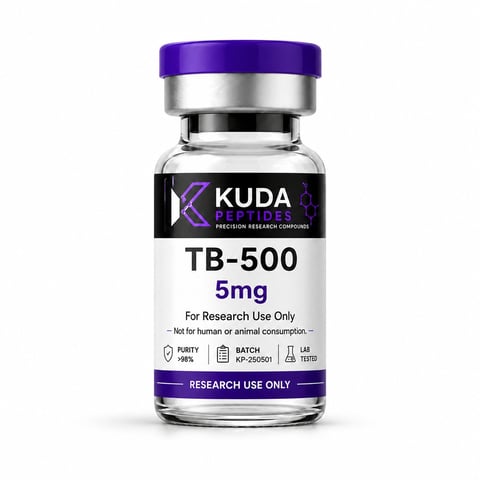
Everything you need to know about Thymosin Beta-4 and its regenerative research applications
TB-500, also known as Thymosin Beta-4 (Tβ4), is a naturally occurring 43-amino acid peptide present in virtually all human and animal cells. It is the predominant form of thymosin in human tissues and plays a critical role in tissue protection, repair, and regeneration.
Discovered in the early 1980s, TB-500 has been the subject of extensive research for its remarkable ability to promote cell migration, stem cell differentiation, and tissue repair. It is particularly noted for wound healing, cardiac protection, and anti-inflammatory responses.
TB-500 promotes cell migration and proliferation by upregulating actin, a protein essential for cell movement and structure.
Stimulates the formation of new blood vessels (angiogenesis), improving blood flow to damaged tissues.
Modulates inflammatory responses by reducing cytokine production and promoting anti-inflammatory pathways.
Supports stem cell differentiation into various tissue types, enhancing natural repair mechanisms.
Accelerates wound closure and promotes scar tissue remodeling.
Shown to reduce cardiac damage and promote repair following heart injury.
Supports skeletal muscle repair and recovery from exercise-induced damage.
Benefits for tendon and ligament repair and joint flexibility.
Supports neuronal survival and promotes nerve regeneration.
Modulates inflammatory responses to reduce tissue damage.
Research Use Only: This product is intended exclusively for laboratory research purposes. Not for human consumption. All research must be conducted in controlled laboratory settings by qualified personnel in accordance with applicable laws and regulations.